
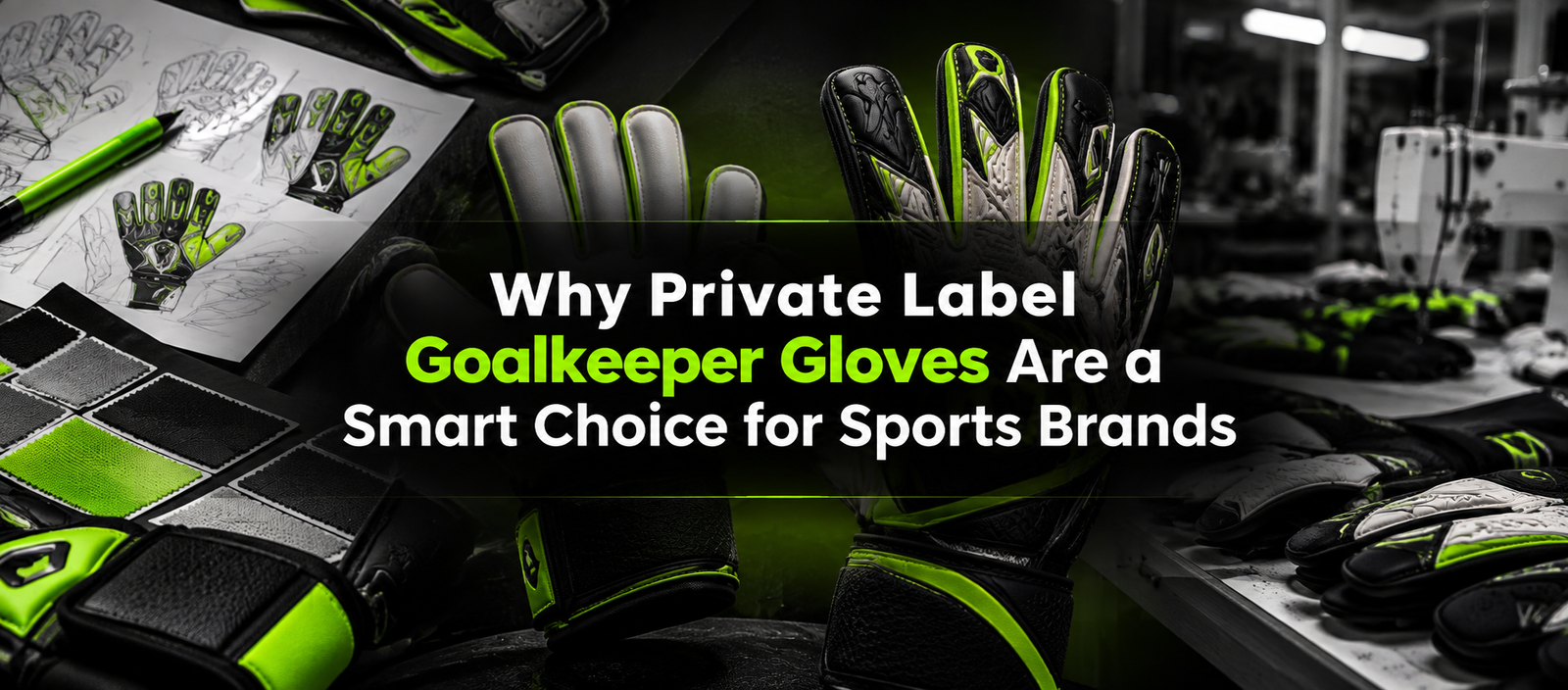
The goalkeeper glove market offers strong opportunities for sports brands, football academies, clubs, distributors, and retailers looking to develop products under their own identity. Instead of selling generic gloves that are also available from many other suppliers, businesses can use private label goalkeeper glove manufacturing to create products with customized designs, materials, colors, branding, and packaging.
Private labeling gives a brand greater control over how its products look, feel, and are presented to customers. From selecting the palm material and glove cut to creating custom backhand graphics and packaging, almost every major element can be developed around the requirements of the brand.
For businesses planning to build or expand a goalkeeper equipment collection, private label manufacturing can provide the flexibility required to create a distinctive product range.
Brompton Sports is a Sialkot-based manufacturer of goalkeeper gloves and custom sportswear, providing manufacturing solutions for brands, teams, clubs, distributors, and other businesses.
What Are Private Label Goalkeeper Gloves?
Private label goalkeeper gloves are gloves manufactured by a supplier specifically for another business to sell under its own brand.
Instead of purchasing standard products and reselling them without a distinctive identity, a business can work with a manufacturer to develop gloves according to its preferred specifications.
Depending on the project, customization may include:
- Brand logo
- Custom colors
- Backhand graphics
- Palm material
- Glove cut
- Wrist closure
- Finger construction
- Size range
- Labels
- Packaging
- Product presentation
This allows the finished goalkeeper gloves to represent the identity of the customer’s brand.
Private label manufacturing can be suitable for established sports companies as well as businesses developing their first goalkeeper glove collection.
Why Private Labeling Matters for Sports Brands
Brand identity is extremely important in the sports industry.
Customers are surrounded by products from different manufacturers, retailers, and online stores. A recognizable visual identity can help a business establish consistency across its product range.
If multiple businesses sell exactly the same generic glove, it can be difficult for customers to distinguish one seller from another.
Private labeling gives businesses an opportunity to develop a product that reflects their own style.
For example, a goalkeeper glove brand might use a consistent combination of black and neon colors throughout its collection. Another company may prefer clean, minimal glove designs. Football academies may want gloves that match their official club colors.
Custom manufacturing makes these approaches possible.
1. Create a Unique Goalkeeper Glove Design
One of the main advantages of private label goalkeeper gloves is design flexibility.
The appearance of a goalkeeper glove can be developed according to the brand’s visual direction rather than being limited to a supplier’s standard design.
Businesses can develop different combinations of:
- Colors
- Patterns
- Graphic elements
- Backhand structures
- Palm colors
- Cuff styles
- Logo placement
- Printed details
The objective is to create a glove that customers can associate with a particular brand.
A well-planned design can also be expanded into several variations, allowing the business to create an entire collection rather than relying on a single product.
2. Choose the Right Goalkeeper Glove Cut
The glove cut affects both appearance and fit.
Private label brands can select different constructions depending on the type of goalkeeper they want to target.
Negative Cut
Negative-cut goalkeeper gloves provide a close-fitting appearance around the fingers. The seams are positioned toward the inside, producing a streamlined profile.
This style is widely used in modern goalkeeper glove collections.
Roll Finger Cut
Roll finger gloves use palm material that wraps around the fingers.
This creates a rounded construction and a different hand feel compared with a negative or flat palm glove.
Flat Palm Cut
Flat palm is a traditional goalkeeper glove construction that generally provides a roomier finger area.
It can be considered for training ranges, youth collections, and other goalkeeper glove designs depending on the required specification.
Hybrid Cut
Hybrid gloves combine characteristics of multiple glove cuts.
This gives brands additional flexibility when they want to develop a distinctive fit or construction.
The appropriate cut should be selected according to the target market rather than appearance alone.
3. Select Palm Materials According to Your Market
The palm is a critical component of goalkeeper gloves.
Different palm specifications can provide different balances of grip, softness, feel, and durability.
A brand developing premium match gloves may have different requirements from one creating training gloves for academies.
Before choosing a palm material, businesses should consider:
- Intended level of play
- Training or match use
- Target selling price
- Expected durability
- Required grip characteristics
- Playing conditions
- Target customer
These factors can help determine the most appropriate specification for a particular glove range.
With private label manufacturing, different palm options can also be used across different product levels.
4. Develop Training and Match Glove Collections
A goalkeeper does not necessarily use the same glove for every situation.
For this reason, brands can develop separate product ranges for different uses.
Training Gloves
Training-focused gloves can be developed around regular use, comfort, practicality, and an appropriate balance between grip and durability.
They can be suitable for:
- Football academies
- Youth players
- Club training
- Regular practice
- Entry-level goalkeeper collections
Match Gloves
Match-oriented gloves may focus more heavily on features such as premium palm specifications, close fit, lightweight construction, specialized cuts, and detailed finishing.
Having multiple product levels allows a sports brand to serve different customer groups within the goalkeeper market.
5. Build a Recognizable Brand Identity
Private labeling is about more than placing a logo on a glove.
Strong product branding involves creating consistency.
Colors, typography, packaging, artwork, photography, and product names can all contribute to the way customers recognize a brand.
For example, a company could maintain similar graphic elements across several goalkeeper glove models while changing the color combination or palm specification.
The result is a collection that feels connected while still providing customers with different choices.
This approach can also be extended to sportswear.
Goalkeeper jerseys, shorts, training wear, and gloves can follow the same visual direction to create a coordinated range.
6. Customize the Backhand
The backhand provides significant opportunities for creative goalkeeper glove design.
Different constructions and materials can be used according to the required product specifications.
The backhand can incorporate:
- Custom printed artwork
- Brand colors
- Geometric graphics
- Textured sections
- Flexible materials
- Raised elements
- Logo positioning
- Contrasting panels
The design should consider both visual appearance and hand movement.
A professional-looking goalkeeper glove should not simply look attractive when displayed. Its construction should also take the intended use of the product into consideration.
7. Customize the Wrist Closure
Wrist construction has become an important part of modern goalkeeper glove design.
Different goalkeeper preferences and design trends have led to multiple closure options.
Depending on the product concept, a glove can feature:
- Traditional wrist strap
- Elastic wristband
- Extended cuff
- Partial strap
- Strapless construction
- Custom closure design
The closure can also become part of the overall visual identity.
A custom wrist strap, for example, may include a brand name, logo, graphic pattern, or contrasting colors.
8. Create Multiple Colorways
Once a goalkeeper glove model has been developed, brands may choose to offer it in multiple color combinations.
For example, the same basic glove could be produced in:
- Black and green
- Black and white
- White and blue
- Red and black
- Orange and black
- Custom team colors
This allows customers to choose a style that matches their preferences while keeping the main construction consistent across the collection.
Colorways can also be released as seasonal collections or coordinated with a brand’s sportswear.
9. Private Label Gloves for Football Academies
Goalkeeper academies can also benefit from custom glove manufacturing.
An academy can develop goalkeeper gloves using its own identity rather than supplying unrelated products from multiple brands.
Academy gloves can feature:
- Academy logo
- Official colors
- Custom graphics
- Youth and adult sizing
- Training specifications
- Personalized packaging
The gloves can then be used by academy players or offered as part of the organization’s merchandise range.
When combined with custom sportswear, academies can create a more consistent appearance across their training environment.
10. Custom Goalkeeper Gloves for Football Clubs
Football clubs can use private label manufacturing to create gloves designed around their club identity.
Colors and graphics can coordinate with official goalkeeper kits and training apparel.
Depending on the project, clubs can develop products for:
- Goalkeepers
- Youth teams
- Academies
- Club shops
- Supporters
- Training programs
Customized products can also help create a more unified brand presentation across different types of sporting equipment.
11. Opportunities for Sports Retailers and Distributors
Retailers and distributors do not always need to depend entirely on established third-party brands.
Private label manufacturing gives businesses the opportunity to introduce their own product range alongside other products they already sell.
A retailer can develop goalkeeper gloves at different product levels and create its own pricing and positioning strategy.
A distributor may develop a range specifically for particular markets, clubs, or sports stores.
The important point is that the specifications should be selected according to the intended customer rather than simply copying an existing glove.
12. Product Sampling Before Production
Sampling is an important stage in private label goalkeeper glove manufacturing.
A physical sample gives the customer an opportunity to review the product before proceeding with larger production quantities.
Depending on the project, a sample can help evaluate:
- Glove fit
- Overall shape
- Palm material
- Glove cut
- Backhand design
- Colors
- Logo placement
- Stitching
- Wrist closure
- Size
- Overall appearance
If adjustments are required, they can be identified before bulk production.
This process is especially useful for new brands because product development often involves refining details after seeing the first physical version.
13. Importance of Quality Control
When a product carries your brand name, consistency matters.
Quality control should therefore be part of the goalkeeper glove manufacturing process.
Inspection can focus on areas such as:
- Material consistency
- Stitching
- Pair matching
- Sizing
- Palm positioning
- Printing
- Logo placement
- Wrist construction
- Finishing
- Packaging
The objective is to ensure that production follows the specifications established for the product.
For businesses, maintaining consistency across repeated orders is particularly important because customers expect the same product standard when purchasing the same model again.
14. Custom Packaging for Goalkeeper Gloves
Packaging is another part of private labeling that should not be overlooked.
The customer’s first interaction with a product may happen before the gloves are even removed from their packaging.
Depending on requirements, businesses can develop packaging with their:
- Logo
- Brand colors
- Product name
- Size information
- Product details
- Care information
- Barcode
- Contact information
- Website
- Social media information
A coordinated packaging design can make the final product feel more complete and professionally presented.
15. Develop a Complete Goalkeeper Product Range
Private label manufacturing can eventually extend beyond a single goalkeeper glove.
Brands can create a broader collection that includes products such as:
- Training goalkeeper gloves
- Match goalkeeper gloves
- Youth goalkeeper gloves
- Different glove cuts
- Multiple colorways
- Goalkeeper jerseys
- Goalkeeper shorts
- Training apparel
- Team sportswear
Developing connected products helps brands build a stronger identity across their collection.
For example, the colors used on a goalkeeper glove can also appear on the goalkeeper jersey and training wear.
16. Private Label Sportswear Alongside Goalkeeper Gloves
Businesses working with Brompton Sports can also develop custom sportswear alongside goalkeeper gloves.
This can be useful for brands that want to expand beyond a single product category.
Custom sportswear projects can be developed according to requirements for:
- Fabric
- Colors
- Sizing
- Artwork
- Printing
- Sublimation
- Embroidery
- Logo placement
- Labels
- Packaging
Combining goalkeeper gloves and sportswear under one visual identity can help businesses create a more complete sports collection.
17. Why Sialkot Is Known for Sports Manufacturing
Sialkot, Pakistan, has a long-established manufacturing industry associated with sporting goods and sportswear.
Manufacturing expertise developed within the region covers numerous processes involved in creating sports products, including material sourcing, cutting, stitching, printing, product assembly, finishing, and packaging.
For international sports businesses, working with a manufacturer in Sialkot can provide access to specialized production knowledge across different sports product categories.
Brompton Sports operates from Sialkot and focuses on custom manufacturing solutions for goalkeeper gloves and sportswear.
18. What to Prepare Before Contacting a Manufacturer
Brands can make product development easier by preparing basic information before beginning a private label project.
Useful details can include:
- Product type
- Reference design
- Preferred glove cut
- Required palm
- Colors
- Logo files
- Target size range
- Quantity requirements
- Packaging preference
- Target market
A reference image or concept sketch can also help communicate the intended visual direction.
The manufacturer can then use this information to better understand the project and discuss suitable manufacturing options.
Who Can Benefit From Private Label Goalkeeper Gloves?
Private label goalkeeper glove manufacturing can be suitable for many types of businesses and organizations, including:
- Goalkeeper glove brands
- Sportswear companies
- Football clubs
- Football academies
- Goalkeeper academies
- Sports retailers
- Online stores
- Distributors
- Wholesalers
- Teamwear suppliers
- Sports equipment businesses
Each type of customer can develop the product according to its own market and requirements.
Private Label Goalkeeper Glove Manufacturer – Brompton Sports
Brompton Sports is a goalkeeper glove and sportswear manufacturer based in Sialkot, Pakistan, providing custom manufacturing solutions for brands and businesses.
We help customers develop goalkeeper gloves according to their individual product concepts and specifications.
Customization options can include:
- Custom goalkeeper glove designs
- Different glove cuts
- Palm material options
- Backhand customization
- Custom colors and patterns
- Wrist closure options
- Logo and brand placement
- Youth and adult sizes
- Custom labels
- Private label packaging
Our manufacturing services are designed for businesses looking to build products under their own brand identity rather than being limited to generic ready-made designs.
From Product Concept to Manufacturing
Developing a private label goalkeeper glove generally starts with understanding what the customer wants to create.
The concept can then move through design development, material selection, specification confirmation, sampling, adjustments, and production.
Clear communication during these stages is important because every brand may have different requirements.
Some customers may prioritize a clean premium appearance. Others may require training-focused products for academies. Some businesses may want bold graphics aimed at retail customers.
A flexible manufacturing process allows the product to be developed around these different objectives.
Final Thoughts
Private label goalkeeper gloves give sports brands greater control over their products and brand identity.
Instead of competing with generic gloves that look similar to products sold by many other businesses, brands can develop goalkeeper gloves around their own designs, colors, materials, glove cuts, branding, wrist systems, sizing, and packaging.
Private labeling also provides room for future expansion. A single goalkeeper glove can develop into a collection of training gloves, match gloves, youth models, different colorways, goalkeeper apparel, and other custom sportswear.
For businesses building a long-term sports brand, developing a consistent and recognizable product collection can be an important part of establishing their presence in the market.
Brompton Sports provides custom and private label goalkeeper glove manufacturing in Sialkot, Pakistan, along with custom sportswear manufacturing for brands, clubs, teams, retailers, distributors, and businesses.
Whether you are developing your first goalkeeper glove or expanding an existing product range, a custom manufacturing approach gives you the flexibility to turn your concept into a product designed around your brand.
Is this conversation helpful so far?